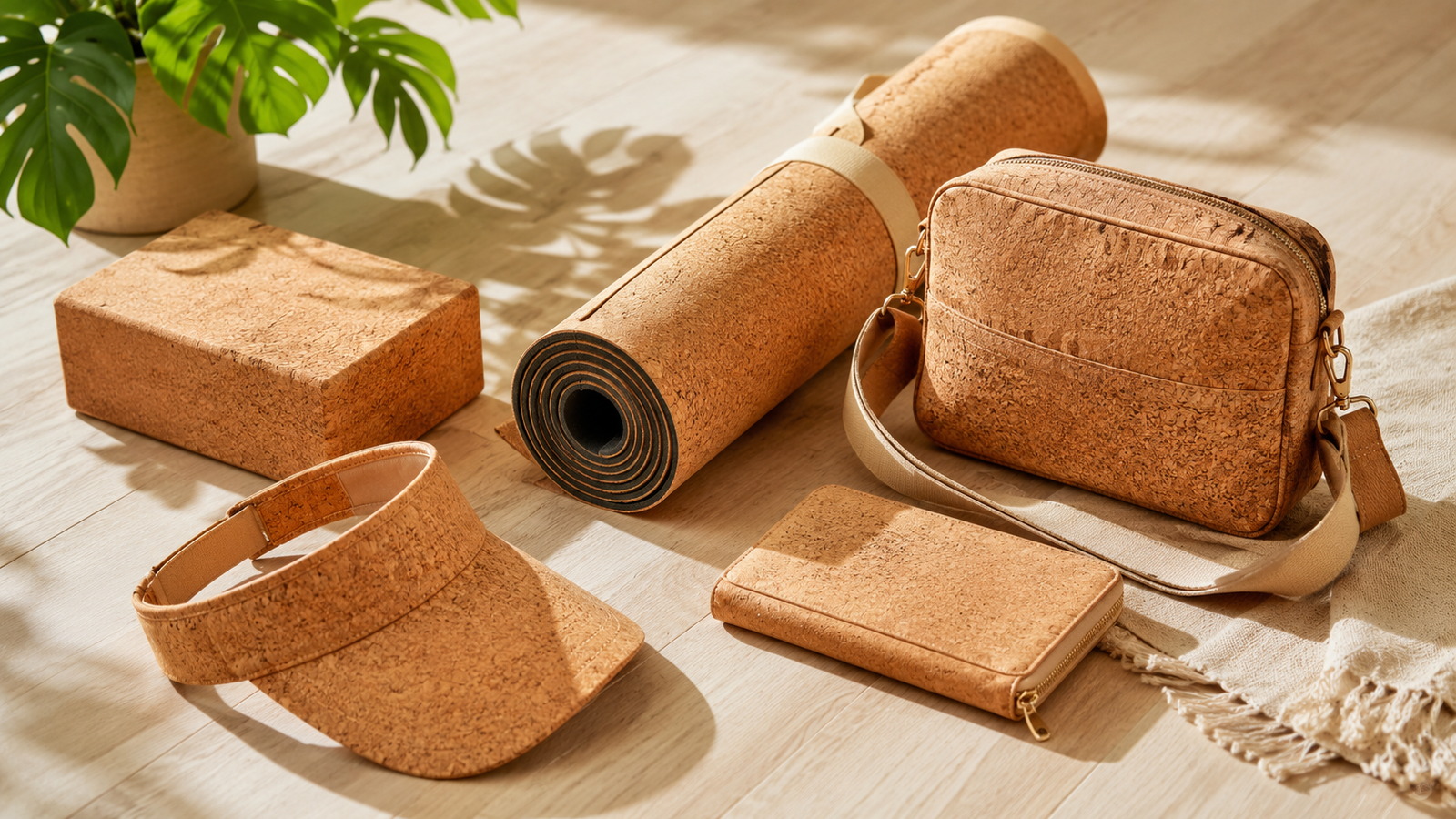

For decades, the yoga industry has leaned on synthetic materials — PVC mats, foam blocks, rubber-based bags — that quietly work against the very philosophy yoga stands for: balance, mindfulness, and harmony with nature. Cork is changing that story.
### What Makes Cork Different
Cork comes from the bark of the cork oak tree, harvested once every nine years without cutting down the tree itself. The tree keeps growing, keeps absorbing carbon, and keeps producing bark for over 200 years. No forests are cleared, no trees are felled — the raw material simply regrows.
This single fact makes cork one of the rare materials that is genuinely renewable, not just recyclable.
### Performance That Matches the Ethics
Cork isn’t chosen only for its sustainability story — it performs. It is naturally:
– **Grippy**, especially when damp, making it ideal for yoga blocks and props used in sweaty studio sessions
– **Antimicrobial**, resisting bacteria and odour build-up better than foam
– **Lightweight yet durable**, holding its shape through years of daily use
– **Hypoallergenic**, safe for sensitive skin and suitable for long, direct contact
### Where Cork Fits in a Yoga Brand’s Product Line
At Indian Yoga Store, cork now runs through an entire ecosystem of products — cork yoga blocks, cork sun visor caps, cork duffle bags, cork wallets, and cork drawstring pouches. This lets wellness brands build a consistent, story-driven product range where every item reinforces the same sustainability message, from the mat you stand on to the bag you carry it in.
### A Material Buyers Can Explain to Their Customers
For studios, resellers, and wellness brands sourcing private-label products, cork offers something rare: a material with a story that sells itself. Customers today ask where things come from. “Harvested without harming the tree, biodegradable, antimicrobial” is a far stronger answer than “made in a factory from petroleum-based rubber.”
### The Takeaway
Cork isn’t a trend — it’s a shift toward materials that respect both the practice of yoga and the planet it’s practiced on. For brands building a genuinely sustainable identity, cork accessories are no longer optional; they’re becoming the standard.
—
## Blog 2
**Title:** The Ayurvedic Case for Copper: Why Copper Bottles, Cups, and Tongue Cleaners Belong in Every Wellness Routine
**Meta Description:** Explore the Ayurvedic and practical reasons behind copper water bottles, copper cups, and copper tongue cleaners — and why they’re a staple in yoga and wellness product lines.
**Category:** Wellness & Ayurveda
**Body:**
Long before “detox” became a marketing word, Ayurveda had already identified copper as a material worth drinking from. The practice of storing water in copper vessels — known as *Tamra Jal* — dates back thousands of years, and modern wellness brands are rediscovering why.
### The Science Behind the Tradition
Copper has natural oligodynamic properties, meaning it can inhibit the growth of certain bacteria when water is stored in it for several hours. Ayurveda recommends storing water in a copper vessel overnight and drinking it first thing in the morning — a ritual believed to support digestion and balance the body’s three doshas (Vata, Pitta, Kapha).
While modern science is still exploring the full range of benefits, copper’s antimicrobial nature is well documented, which is one reason copper touchpoints are used in hospitals and public spaces globally.
### Beyond the Water Bottle
Copper’s role in wellness extends further than bottles:
– **Copper tongue cleaners** are considered more effective than plastic or steel for Ayurvedic *jihwa prakshalana* (tongue scraping), a practice believed to remove toxins and support oral hygiene.
– **Copper cups**, often used for etched, gifting-ready designs, turn a daily health habit into a small ritual worth showing off.
– **Kansa wands**, made from a copper-tin alloy, are used in facial massage for their believed detoxifying and skin-brightening properties.
### Why Wellness Brands Are Stocking Copper
Copper products check three boxes that matter to modern buyers: they’re rooted in genuine tradition, they photograph beautifully for content and packaging, and they invite repeat use — a customer who buys a copper bottle often comes back for the cup, the tongue cleaner, and the wand.
### The Takeaway
Copper isn’t a wellness fad; it’s a category with centuries of cultural weight behind it. For yoga and wellness brands looking to round out their product line with items that customers actually reach for daily, copper is one of the most trusted materials in the Ayurvedic toolkit.
—
## Blog 3
**Title:** The Sound of Stillness: A Buyer’s Guide to Singing Bowls and Tibetan Bells
**Meta Description:** A practical guide to brass singing bowls and Tibetan bells — how they’re used in meditation, what to look for when sourcing, and why they remain a bestseller for wellness brands.
**Category:** Meditation & Sound Healing
**Body:**
Few objects carry as much quiet authority as a singing bowl. A single strike, and the room changes. For centuries, singing bowls and Tibetan bells have been used across the Himalayan region for meditation, prayer, and what is now widely known as sound healing.
### How Singing Bowls Are Used
A singing bowl is played by striking it gently or running a wooden mallet around its rim, producing a sustained resonant tone. In meditation practice, this sound is used to:
– Mark the beginning and end of a session
– Help practitioners settle into a meditative state faster
– Serve as a focal point for sound-based mindfulness exercises
Tibetan bells serve a similar ceremonial purpose, often used in pairs (a bell and a dorje) in Tibetan Buddhist ritual, and increasingly in yoga studios as a way to signal transitions between poses or the close of a class.
### What Makes a Good Singing Bowl
For brands sourcing singing bowls for retail or studio use, a few factors separate a quality piece from a novelty item:
– **Sound sustain** — a well-made bowl holds its tone for several seconds after being struck
– **Material consistency** — machine-made brass bowls offer consistent tone and finish, ideal for consistent retail batches
– **Finish and detailing** — engraved mantras and traditional motifs add both authenticity and shelf appeal
### Why This Category Performs Well at Retail
Singing bowls sit at an appealing intersection: they’re functional meditation tools, but they’re also striking home décor. A customer who has no meditation practice at all may still buy one for its aesthetic and symbolic value — which is part of why this category consistently performs well across both wellness stores and lifestyle retail.
### The Takeaway
Whether used for a formal sound bath or simply displayed as a mindful object at home, singing bowls and Tibetan bells offer wellness brands a product that’s rich in tradition, visually compelling, and genuinely functional — a rare combination in retail.
—
## Blog 4
**Title:** Beyond the Mat: How Eye Pillows, Bolsters, and Meditation Cushions Complete a Yoga Practice
**Meta Description:** Why yoga props like eye pillows, bolsters, and meditation cushions matter as much as the mat itself — and what to consider when sourcing them for a wellness brand.
**Category:** Yoga Props & Accessories
**Body:**
A yoga mat gets all the attention, but ask any dedicated practitioner and they’ll tell you: the props are where the real comfort happens. Eye pillows, bolsters, and meditation cushions aren’t accessories in the decorative sense — they’re functional tools that shape how a practice feels.
### Eye Pillows: Small Object, Big Role
An eye pillow is typically filled with flaxseed or lavender and used during Savasana (final relaxation) or restorative yoga poses. The gentle weight applies light pressure to the eyes and forehead, which is widely associated with a calming, parasympathetic response — helping the nervous system shift out of “active” mode.
Cotton hand block printed eye pillows, in particular, combine function with a distinct visual identity, making them a popular add-on or gifting item for studios and wellness brands.
### Bolsters: Support for Restorative Practice
A cotton yoga bolster provides structured support for restorative and yin yoga poses, pregnancy-friendly sequences, and gentle backbends. Unlike a folded blanket, a bolster holds its shape consistently, which matters both for comfort and for the instructor’s ability to guide a pose accurately.
### Meditation Cushions: Built for Stillness
Sitting still for twenty minutes sounds simple until the hips and lower back start complaining. A well-made cotton meditation cushion elevates the hips slightly above the knees, encouraging a natural spinal alignment that makes longer meditation sessions genuinely sustainable — not just tolerable.
### Why Props Matter for Wellness Brands
Props are often the products that turn a first-time buyer into a repeat customer. A student who buys a mat once may come back for an eye pillow, then a bolster, then a meditation cushion — each purchase deepening their relationship with the brand. For studios and resellers, stocking a well-curated props range isn’t a side offering; it’s a retention strategy.
### The Takeaway
The mat starts the practice, but props like eye pillows, bolsters, and meditation cushions are what make that practice comfortable enough to return to, day after day. For any wellness brand, this category deserves as much attention as the mat itself.
—
## Blog 5
**Title:** From Yoga Studio to Everyday Carry: The Rise of Eco-Friendly Bags, Wallets, and Travel Accessories
**Meta Description:** How sustainable materials like cork, denim, and jute are turning yoga mat bags and travel accessories into everyday lifestyle essentials.
**Category:** Sustainable Fashion
**Body:**
A yoga brand’s relationship with a customer doesn’t have to end at the studio door. Increasingly, it doesn’t — thanks to a growing range of eco-friendly bags, wallets, and travel accessories that carry the same values from the yoga mat into daily life.
### Why This Category Is Growing
Wellness-conscious consumers don’t compartmentalise their values. Someone who chooses a cork yoga block over a foam one is often the same person looking for a cork wallet instead of leather, or a jute tote bag instead of a plastic-lined one. Sustainable fashion accessories let a yoga brand extend its identity beyond fitness products into everyday lifestyle categories — without diluting the message.
### The Materials Doing the Work
– **Cork** — used in duffle bags, crossbody slings, wallets, and passport holders, offering a leather-like look and feel without animal products
– **Denim and canvas** — repurposed into rugged duffle bags and multi-utility organiser pouches, combining durability with a casual, everyday aesthetic
– **Jute** — a biodegradable, high-strength fibre ideal for beach bags and drawstring pouches, with a distinct natural texture that stands out on shelf
– **Hand block printed cotton** — brings artisanal, handmade character to tote bags and pouches, appealing to buyers who value craftsmanship over mass production
### Function Matters as Much as Material
These aren’t just eco-statements — they’re built for use. A denim and cork duffle bag with an adjustable shoulder strap works as well for a weekend trip as it does for carrying a mat to class. A multi-utility organiser pouch keeps chargers, receipts, and small essentials contained, whether in a gym bag or a suitcase.
### Why Brands Are Expanding Into This Category
For wellness and yoga brands, bags and wallets solve a real merchandising problem: they extend average order value, they’re gift-friendly, and they’re used far more often than a yoga mat — meaning the brand stays visible in the customer’s daily life, not just during a 60-minute class.
### The Takeaway
Sustainable bags, wallets, and travel accessories are no longer a side category — they’re becoming a natural extension of what a yoga and wellness brand represents. For customers, it means carrying their values with them, literally, well beyond the studio.
—
*All five posts are ready to paste directly into the blog-home.php / blog-single.php setup — each includes a suggested title, meta description, and category for SEO and internal linking.*

Hemant
Author at Indian Yoga Store.
